Generative art2024
240507: Reality Lens
Contents & work details
- Archive year
- 2024
- Type
- Generative art
- Artist
- Che-Yu Wu 吳哲宇
- Made
- 7 May 2024, the daily sketch 240507
- Named
- 8 May 2026, before delivery to FILE
- Form
- p5.js and a GLSL fragment shader, computed live at the size of the window, with no random seed
- Interaction
- Moving the mouse changes the twist and the colours; left alone, the program walks a figure of eight
- Exhibited
- FILE São Paulo 2026: INTER-CRIATIVIDADE, Dimensão Randômica section
- Dates and venue
- 20 August to 11 October 2026, FIESP Cultural Centre, São Paulo
- Exhibited as
- A 4K video, sixty frames a second, 2 min 34 s, watched on tablets
- Source
- OpenProcessing 2262432, CC BY-NC-SA
Overview
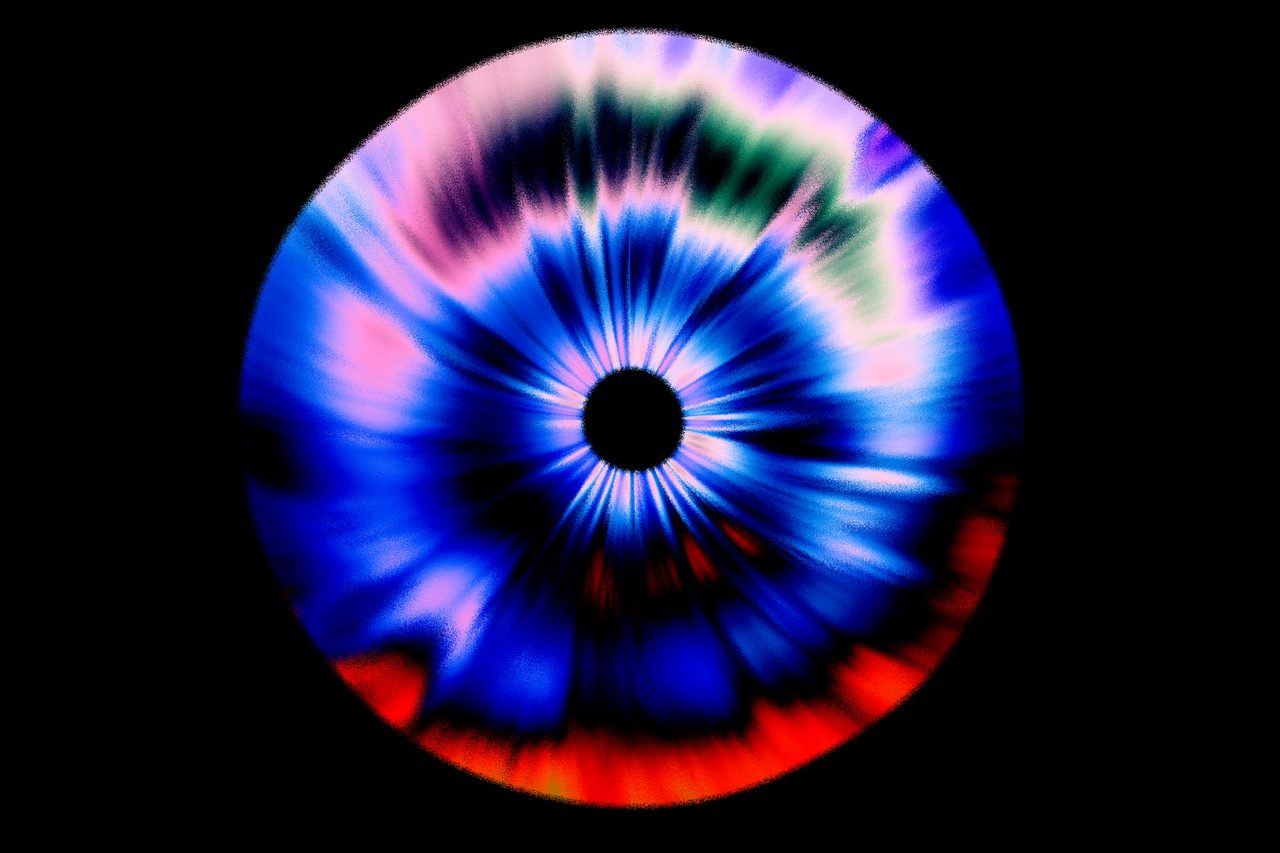
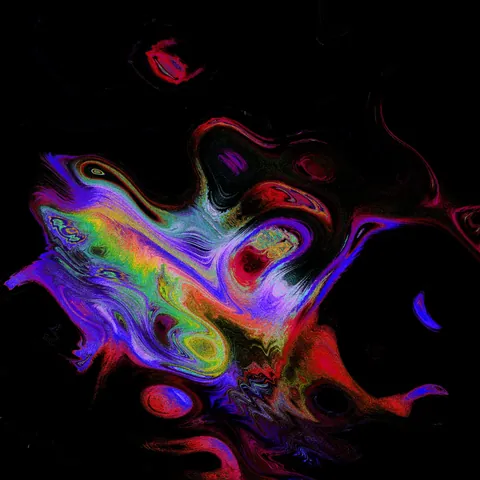
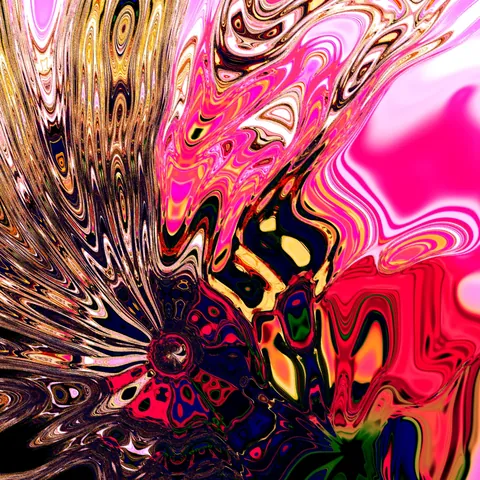
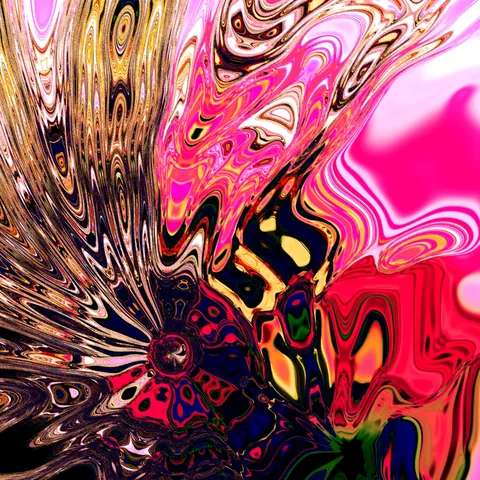
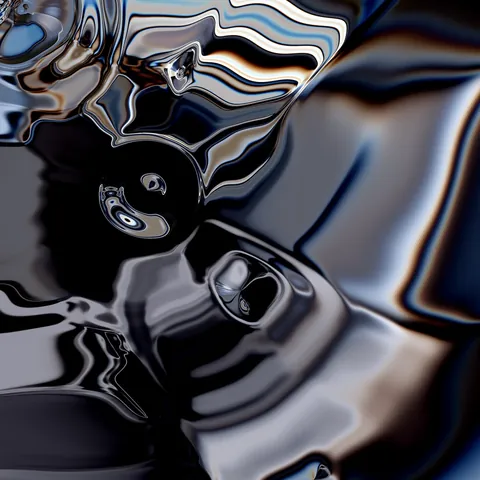
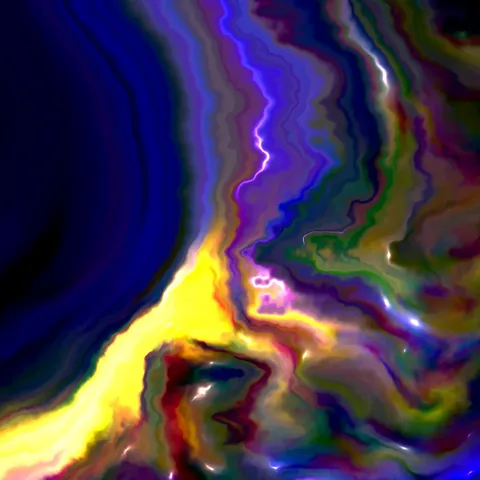
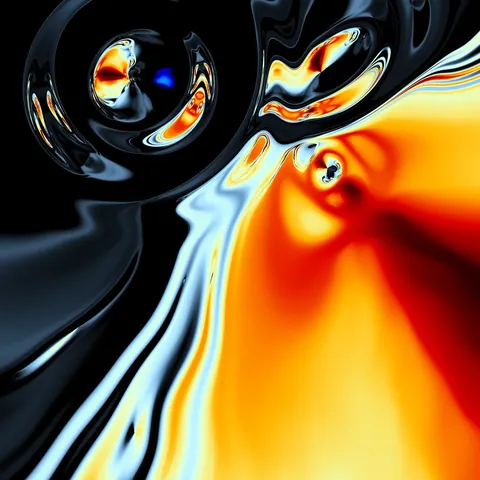
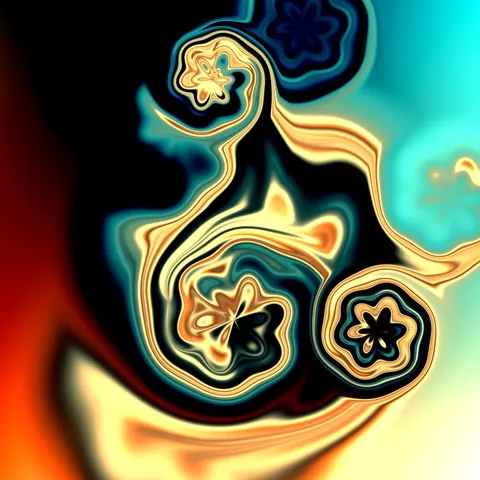
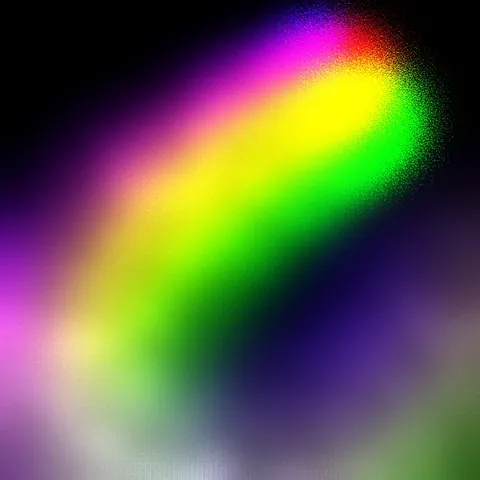
240507: Reality Lens is a shader computed live in the browser. Each time it opens, fifteen invisible points are scattered over the picture, and every pixel passes round them one after another, turned through an angle, pushed away or drawn in, then overlaid with several layers of noise, before three sets of sine bands decide its colour. Between broad fields of black, bands of red, green and violet flow like molten metal, and rings like those of a lens often float among them. When no one touches it, the program walks an invisible mouse along a figure of eight; the moment a real mouse moves, the run of the bands is handed to that hand.
It began as one of Che-Yu Wu’s daily sketches, on 7 May 2024, titled only with the date. Two years later the curators of FILE, the Electronic Language International Festival in Brazil, wrote to invite it, and the link in their letter was its page on OpenProcessing. Before delivering it he added the words Reality Lens. From 20 August to 11 October 2026 it was shown as a two-and-a-half-minute 4K recording at the FIESP Cultural Centre on Avenida Paulista in São Paulo, where visitors watched it by pointing tablets provided by the venue at QR codes.
7 May 2024
240507 was created on 7 May 2024, with a single line in its description: “extend metal algo”. It branches from 220113 Subjective Mirror of January 2022; above that come 220112 Molten Metal, 220110 Event Horizon and 200625 Drawing Rainbow from June 2020, and at the top a starting file called shader template. The sketch lineage on this site places it in one family with eighteen other shader sketches.
A note at the top of the code credits OpenProcessing sketch 920144 for the basic shader structure and sketch 881537 for the vertex shader. The source is still public on OpenProcessing, under a CC BY-NC-SA licence.
Fifteen points
The moment it opens, the program scatters fifteen points over the picture, each kept some distance from the one before, each with its own reach and its own twisting force. Every pixel on the screen must pass the fifteen points in turn. At each one it is turned about that point through an angle that depends on how far away it is and where the mouse is; if it falls within the point’s reach, its distance from the point is pushed out or drawn in as well. After fifteen such passes the pixel is nowhere near where it started, and only then does the program ask what colour it should be.
The colour is three sets of sine bands, one each for red, green and blue, running along the twisted coordinates. A sine wave dips below zero, and a negative colour is black, so the bands that glow at full saturation always lie against wide fields of black.
There is no random seed. Each opening puts the fifteen points somewhere new, and so makes a different picture. While no one touches the mouse, the program walks an invisible one along a figure of eight, a full circuit taking about forty-two seconds at sixty frames a second, its sweep swelling and shrinking over time. Once a visitor moves the mouse the walking stops, and from then on how the bands twist and which colours they take is left to that hand.
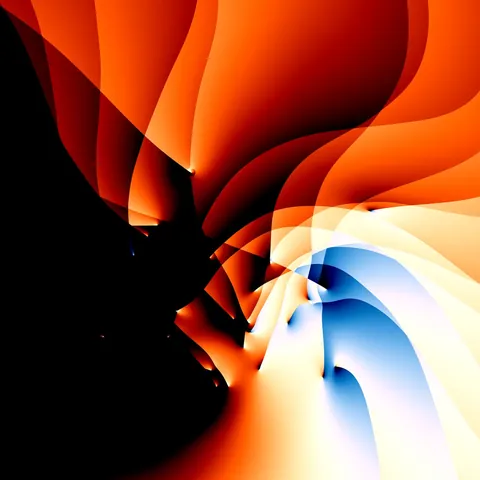
The same delivered code, forty seconds after opening, the same self-walking mouse; only the positions of the fifteen points differ. The broad run of the bands stays close, while the metallic masses and lenses grow in different places. Recomputed locally from the work’s code at 1,600 × 900. Tap to enlarge.
The fifteen points stay put and the time is again forty seconds; only the mouse is held near each corner of the picture. The direction of the twist and the whole palette change with it. Tap to enlarge.
FILE São Paulo 2026
On 31 March 2026 Clarissa Vidotto of the FILE curatorial team wrote with an invitation. FILE is a non-profit festival held in Brazil since 2000 for works that take technology as their medium. The letter said the work would go into a section of that year’s exhibition named Generatrix, gathering work that investigates randomness, processing and generative resources, and that it would be shown as a video, played on tablets alongside the other works in the section. Che-Yu Wu wrote back the same day to accept.
Six things were to be delivered: a synopsis of at most five hundred characters, a biography of at most four hundred, a public viewing link, the artwork file, and images of the work and the artist at 300 dpi. On 8 May the work was given its name. On 10 May he recorded it as a 4K video at sixty frames a second, two minutes and thirty-four seconds long. The delivered code differs from the sketch in two lines only: pixel density raised from 2 to 4, and a timestamp added to the file name when a frame is saved. A little after one in the morning on 13 May he saved sixty-one still frames, and at seven minutes past two he sent the six items gathered in one document, two days before the deadline. On 29 May both sides completed a free licence by electronic signature.
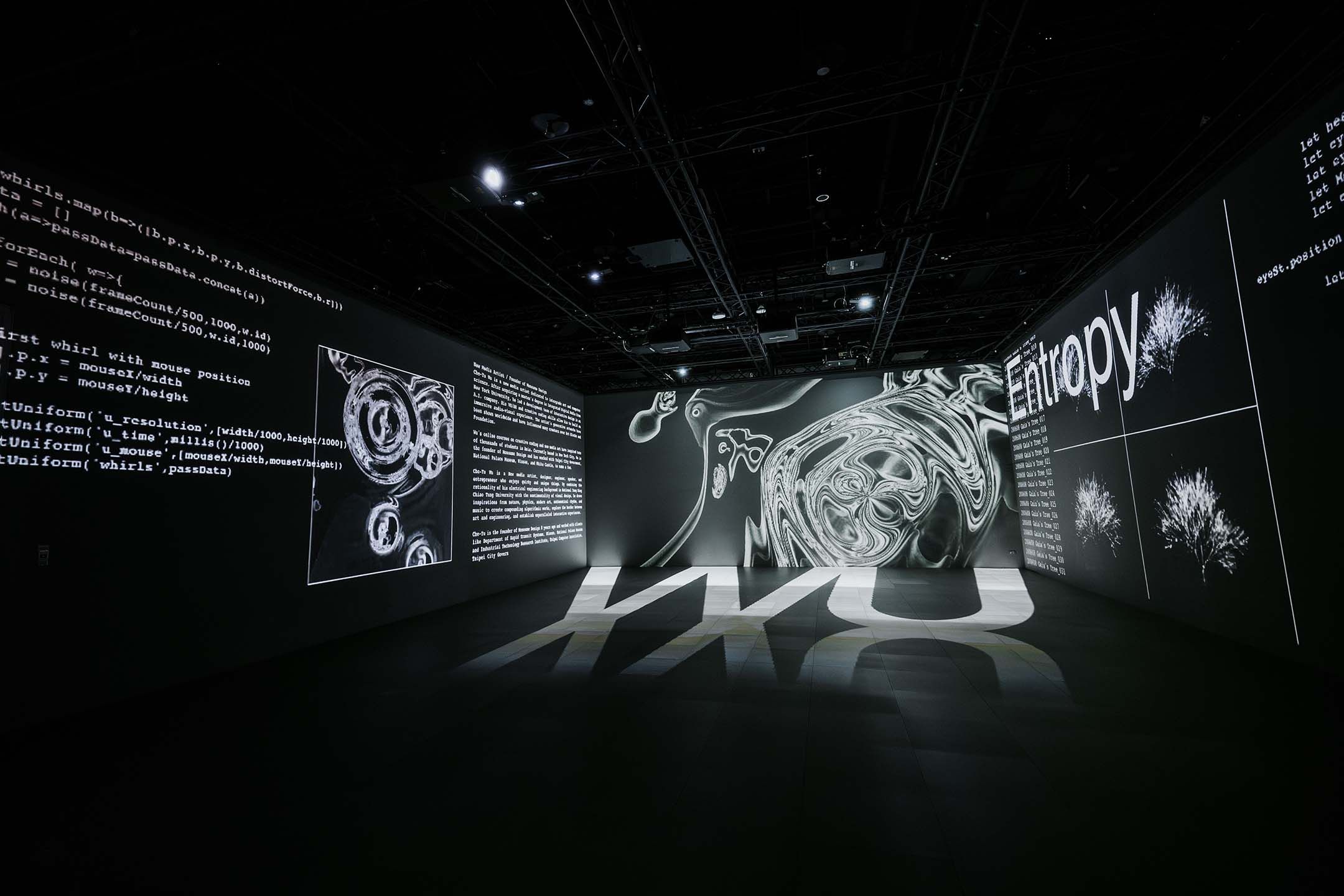
When the exhibition opened, FILE São Paulo 2026 carried the title INTER-CRIATIVIDADE. It opened on the evening of 19 August after a lecture by the mathematician Gregory Chaitin and the epistemologist Virginia Chaitin, and was open to visitors free of charge from 20 August to 11 October. The section the letter had called Generatrix was shown as Dimensão Randômica, an augmented-reality exhibition running alongside the main show: visitors pointed tablets provided by the venue at QR codes, and the works played on the screens. It held twenty-five works by seventeen artists and groups, among them Casey Reas, Karl Sims, Scott Draves and Raven Kwok; 240507: Reality Lens was the only one from Taiwan.
Through the two months of the exhibition the same source stayed public on OpenProcessing. In São Paulo the tablets played the two and a half minutes recorded on 10 May 2026; opened on any computer, the fifteen points fall somewhere new.
“240507: Reality Lens” is a real-time WebGL meditation where fifteen vortex points distort every pixel through layers of noise, angle, and time. The work makes algorithmic perception visible: there is no unmediated image — every color and edge arrives already refracted. Like liquid marble between order and chaos, it asks how mathematics becomes felt aesthetics, and whether any perception of “the real” is not itself a lens of computation.
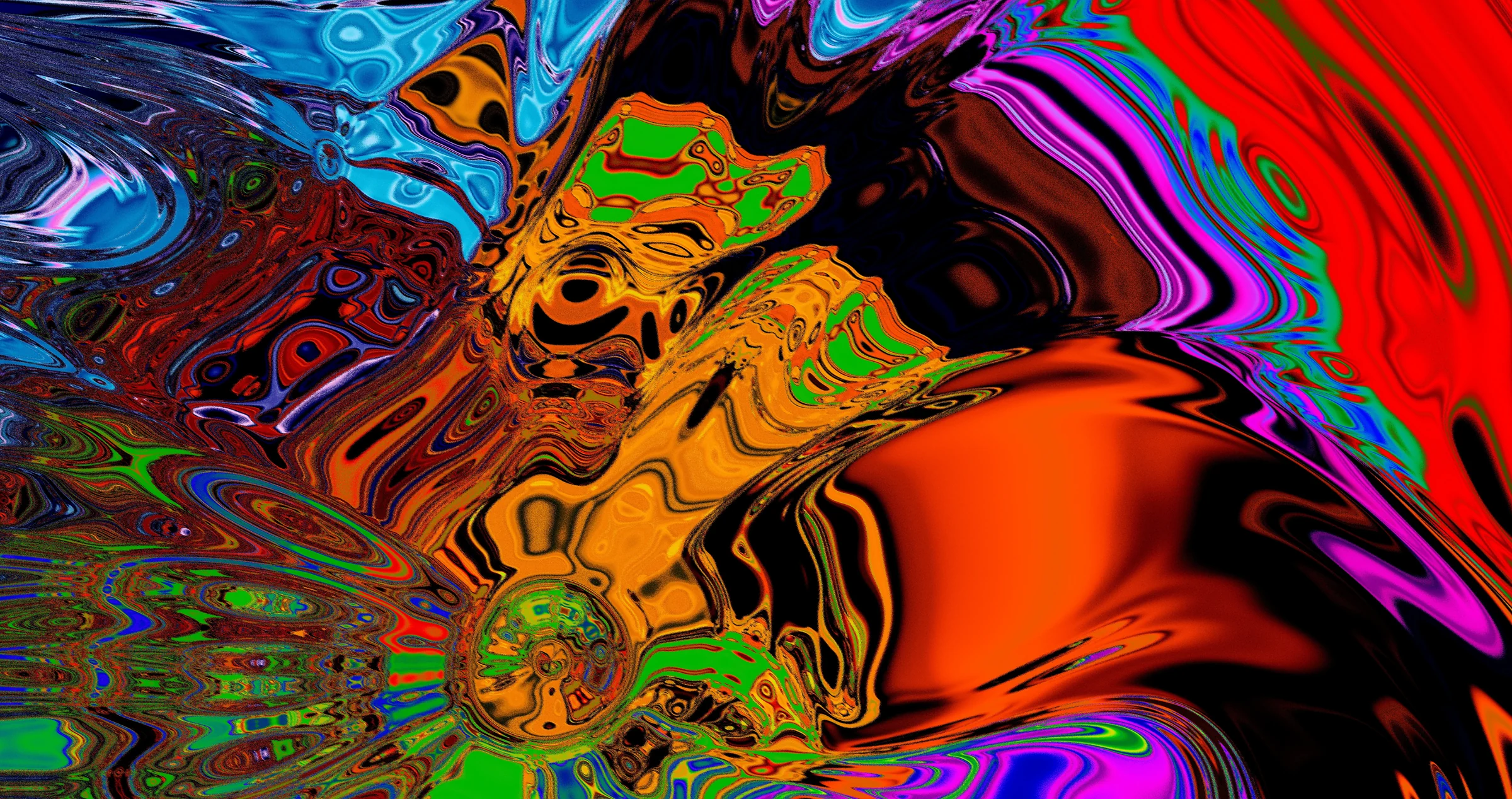
The 100% button shows the original at its actual pixel size. The picture is cut into 210 tiles of 512 pixels, and only the tiles in view load as you zoom. The program has no random seed and the fifteen points and the moment of this picture were not kept, so the same picture cannot be computed again at a larger size; the original file is as large as it gets.
Saved from the screen with the space bar between 1:18 and 1:52 in the morning; most originals are 7,922 × 4,187 pixels. Tap to enlarge.
At real speed, scaled to 1,280 wide, the ends overlapped into a loop.
- 01
June 2020
shader template, then 200625 Drawing Rainbow
- 02
January 2022
Event Horizon, Molten Metal and Subjective Mirror branch one after another
- 03
7 May 2024
The daily sketch 240507: “extend metal algo”
- 04
31 March 2026
FILE writes to invite it; he accepts the same day
- 05
8 May 2026
Named 240507: Reality Lens
- 06
10 May 2026
Recorded as a 4K video, sixty frames a second, 2 min 34 s
- 07
13 May 2026
Sixty-one stills saved after midnight; the files delivered
- 08
29 May 2026
The free licence signed
- 09
19 August 2026
FILE São Paulo 2026 opens; visitors from the next day
- 10
11 October 2026
The exhibition closes
Dates follow the OpenProcessing record, the delivered files, correspondence and the FILE website.
- Original240507, the original sketch and code
- Sketch240507 on this site
- ExhibitionFILE 2026: INTER-CRIATIVIDADE
- SectionThe Dimensão Randômica section, twenty-five works
- Work pageChe-Yu Wu – 240507: Reality Lens – Taiwan
Notes are our own sketch pages; tags are the exhibition, section and work pages on the FILE website. Every one opens.
This work grew out of the “Drawing Rainbow” family: 19 daily sketches, 2020-06-29 to 2024-05-07. 18 of the links are forks.


Credits
- Concept and code
- Che-Yu Wu
- Code references
- OpenProcessing 920144 (shader structure) and 881537 (vertex shader)
- FILE 2026 curators
- Ricardo Barreto and Paula Perissinotto (co-founders); Clarissa Vidotto and Victor Sardenberg (co-curators)
- Exhibited by
- FILE, Electronic Language International Festival, at the FIESP Cultural Centre, São Paulo