NFT / Digital2021
Electriz
Contents & work details
- Archive year
- 2021
- Type
- NFT / Digital
- Artist
- Che-Yu Wu 吳哲宇
- Platform
- Art Blocks Factory project #216 (Ethereum, core contract 0xa7d8…d270)
- Editions
- 910 editions, #0 to #909; #0 minted by the artist on 27 November 2021
- Release
- Dutch auction from 17:00 UTC on 7 December 2021, 3 ETH down to 0.1 ETH; fully minted at 17:55:38
- Script
- p5.js 1.0.0, three on-chain chunks totalling 25,034 characters, locked; the script is self-hosted on this site’s subdomain, where every edition grows again
- Traits
- Eight: palette (thirteen), special type (none, wireframe, spray, Hamily), division, emit, chaos factor 0 to 10, particle count, particle size, start position
- Keys
- T toggles the canvas texture (off for printing), S saves, space shows the hash, double-click toggles texture
- Licence
- CC BY-NC-SA 4.0; 5% secondary royalty
- Database
- The 910 hashes, trait shares, palettes and re-run captures
Overview
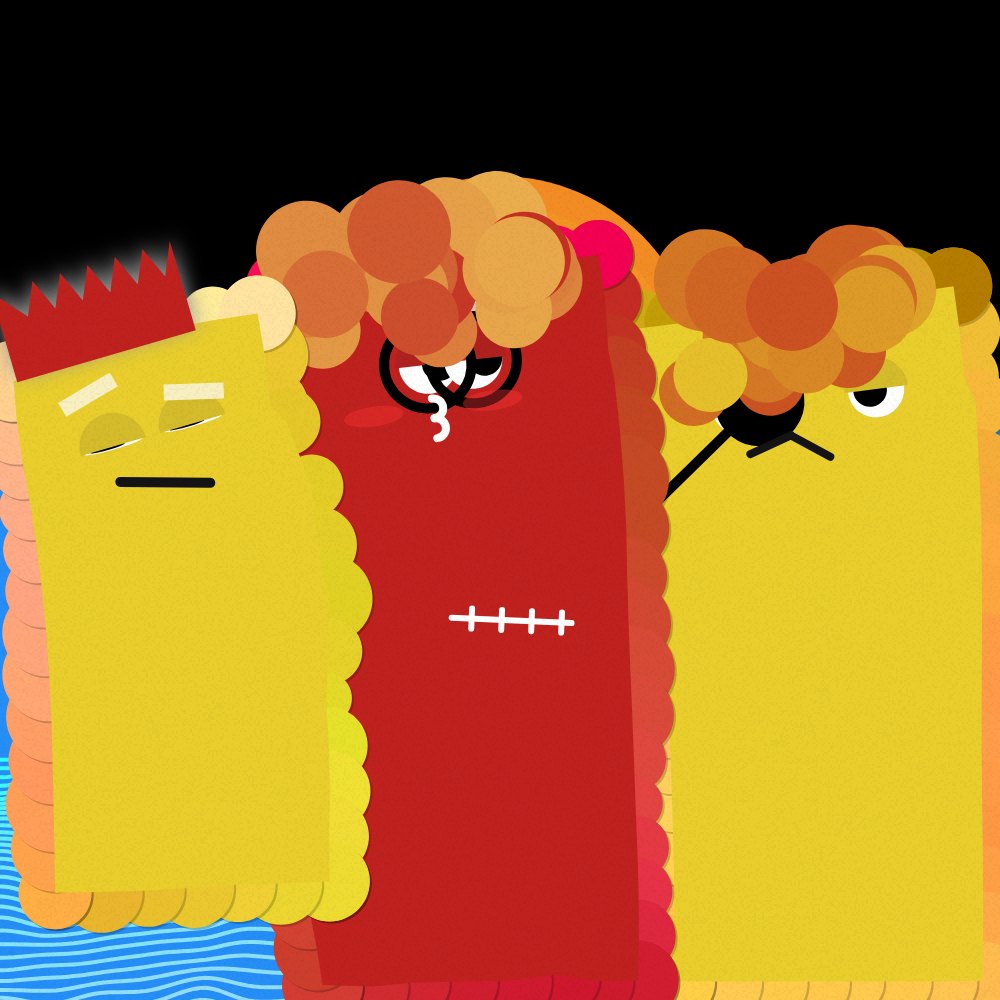
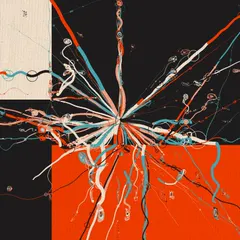
I have been taken with physics since I was small: books about the third and fourth dimensions, and about what the smallest particle in the world might be. To find the smallest unit, scientists smash particles in a collider, but the fragments are too small to see, so they built the cloud chamber: a particle passes through supersaturated vapour, the vapour condenses along its path, and what a person sees is the track, from whose radius and mass they guess what it was. Electriz is a digital cloud chamber. The canvas is divided into regions of different physics, some rotating, some noisy, some gridded; particles shoot out from the centre or a corner, change their gait as they cross a boundary, split off a child one time in ten, shrink as they go and vanish after five hundred frames; at chaos factor zero everything is a straight line, at ten the whole picture twists. Making art works the same way: interesting ideas from reality and imagination are thrown in to collide, and in the instant of collision you look for something that exists only once.
On 7 December 2021 it became project #216 on Art Blocks, and I was among the first Taiwanese artists there. The edition count, nine hundred and ten, is the tenth of September: the day in 2008 when the Large Hadron Collider in Europe first sent a proton beam around its whole ring. The Dutch auction opened at three ether and every edition was minted within fifty-five minutes and thirty-eight seconds. Edition zero I minted myself, a full moon hugged by particles, and I still love it.
- 01
hash
Sixty-four hex digits from the chain; the first sixteen become a seed, xorshift draws from it, noiseSeed and randomSeed both take it
- 02
Traits
Palette, special type, division, emit, chaos factor, particle count, size and start position, drawn by weight
- 03
Divide the space
Straight lines or arcs cut the canvas into regions, each with a law: field, noise, curl, square, step, parallel, or nothing
- 04
Release the particles
Shot from the centre or a corner; a new gait at each boundary, a one-in-ten split, a shrinking radius, gone after five hundred frames
- 05
Come to rest
Around a thousand frames the picture is still; the canvas weave goes on top, T turns it off, S saves
The same hash, the same p5 1.0.0 and the same frame count always give the same picture: that is why we dared to re-run every edition.
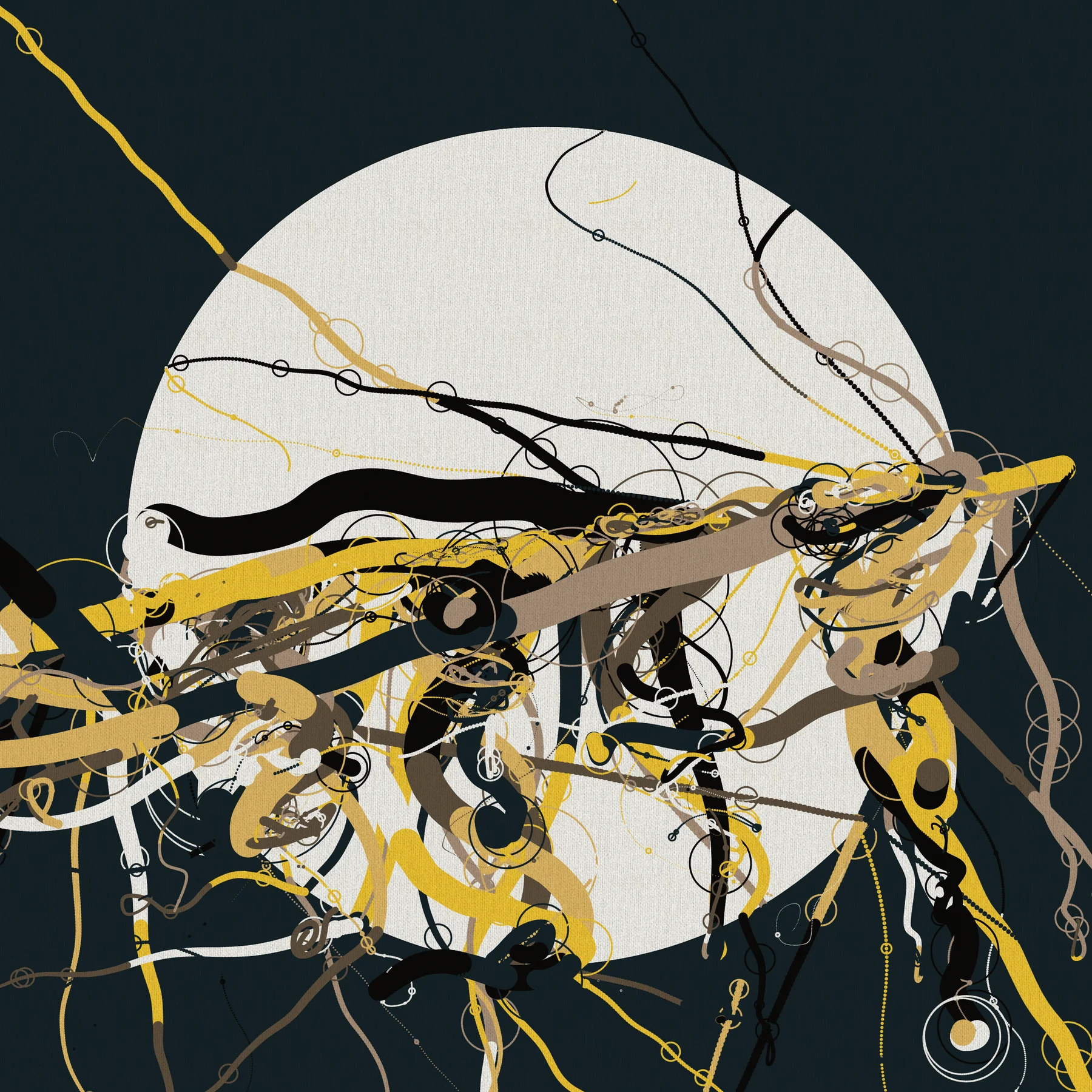
0x7ebed5b778af185b7f3da6ad572de9862ce59d1b9b7cbc628ddd9e351ea4dd67- palette
- Earth6%
- special type
- None58%
- emit
- horizontal line8%
- division
- angular24%
- chaos factor
- 716%
- particle count
- medium70%
- particle size
- M28%
- start position
- centre81%
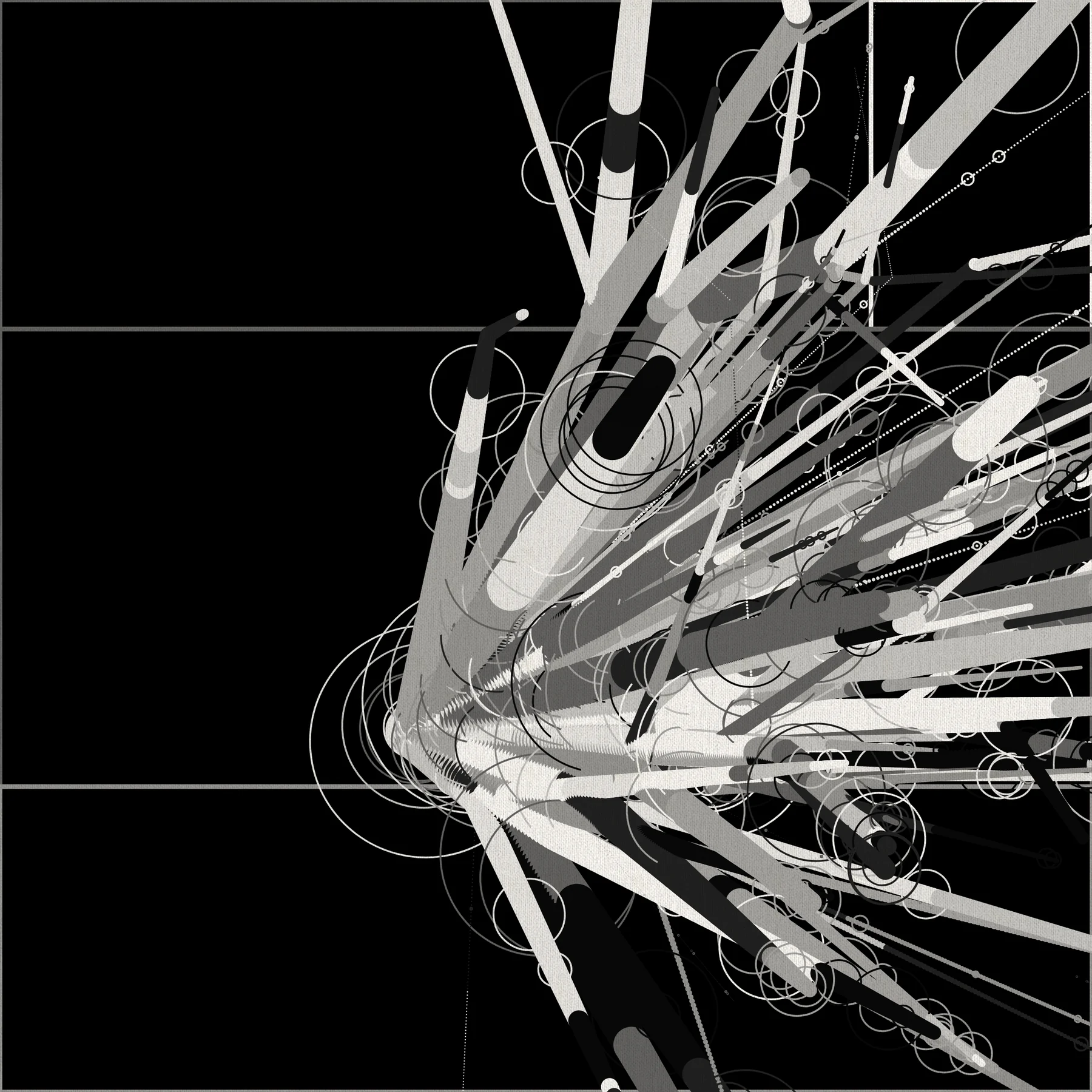
0xf8e12281b96450d33c2331c1ac20bd94bd4916150560afe08348b006175bb9e9- palette
- Paper8%
- special type
- Wireframe30%
- emit
- random40%
- division
- rectangular76%
- chaos factor
- 04%
- particle count
- fewer16%
- particle size
- L46%
- start position
- bottom left4%
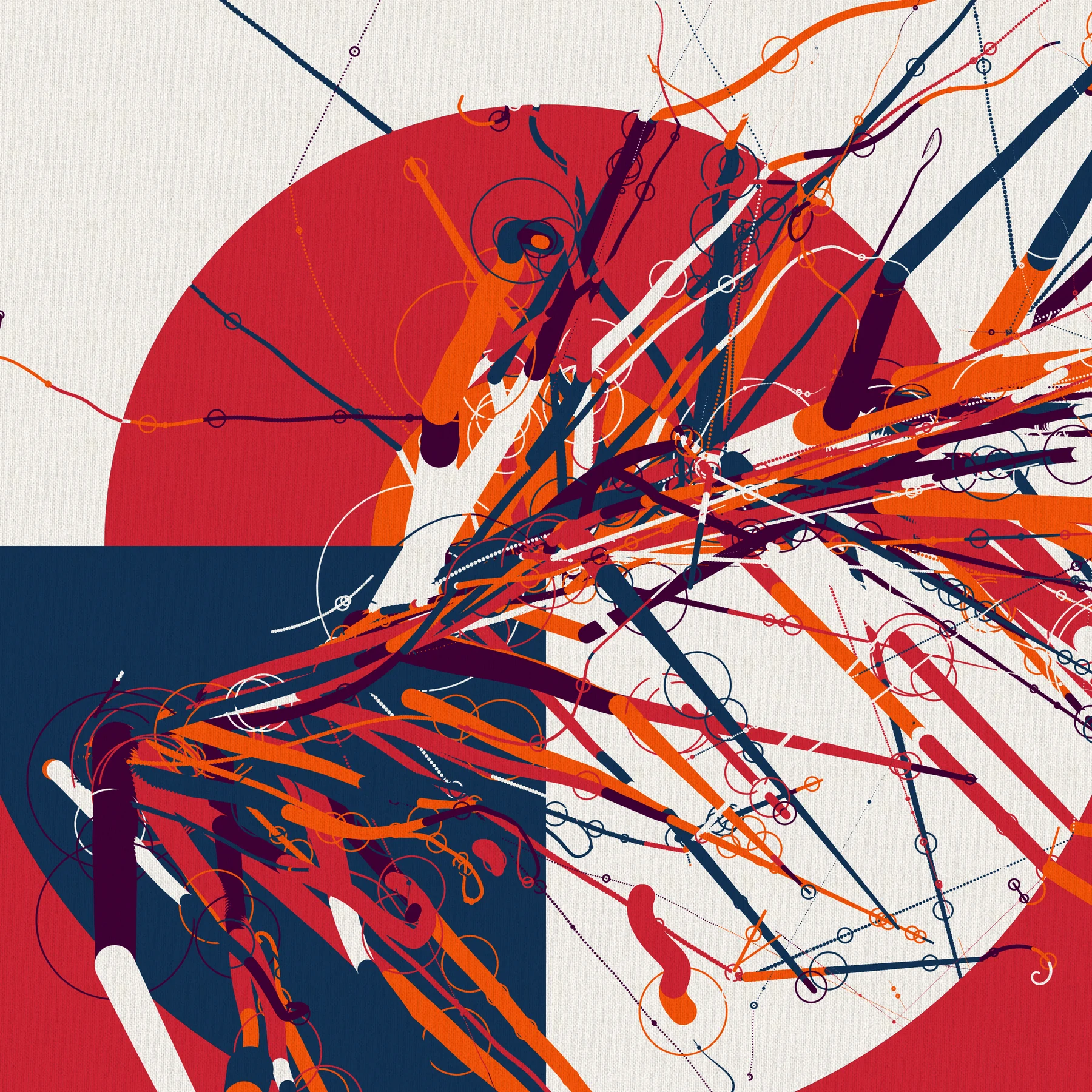
0xb612a94236b76d8ba70c08c0d57df7702d64fe026b6b63d94897bac1293e77bf- palette
- Festival8%
- special type
- None58%
- emit
- horizontal line8%
- division
- angular24%
- chaos factor
- 411%
- particle count
- medium70%
- particle size
- M28%
- start position
- centre81%
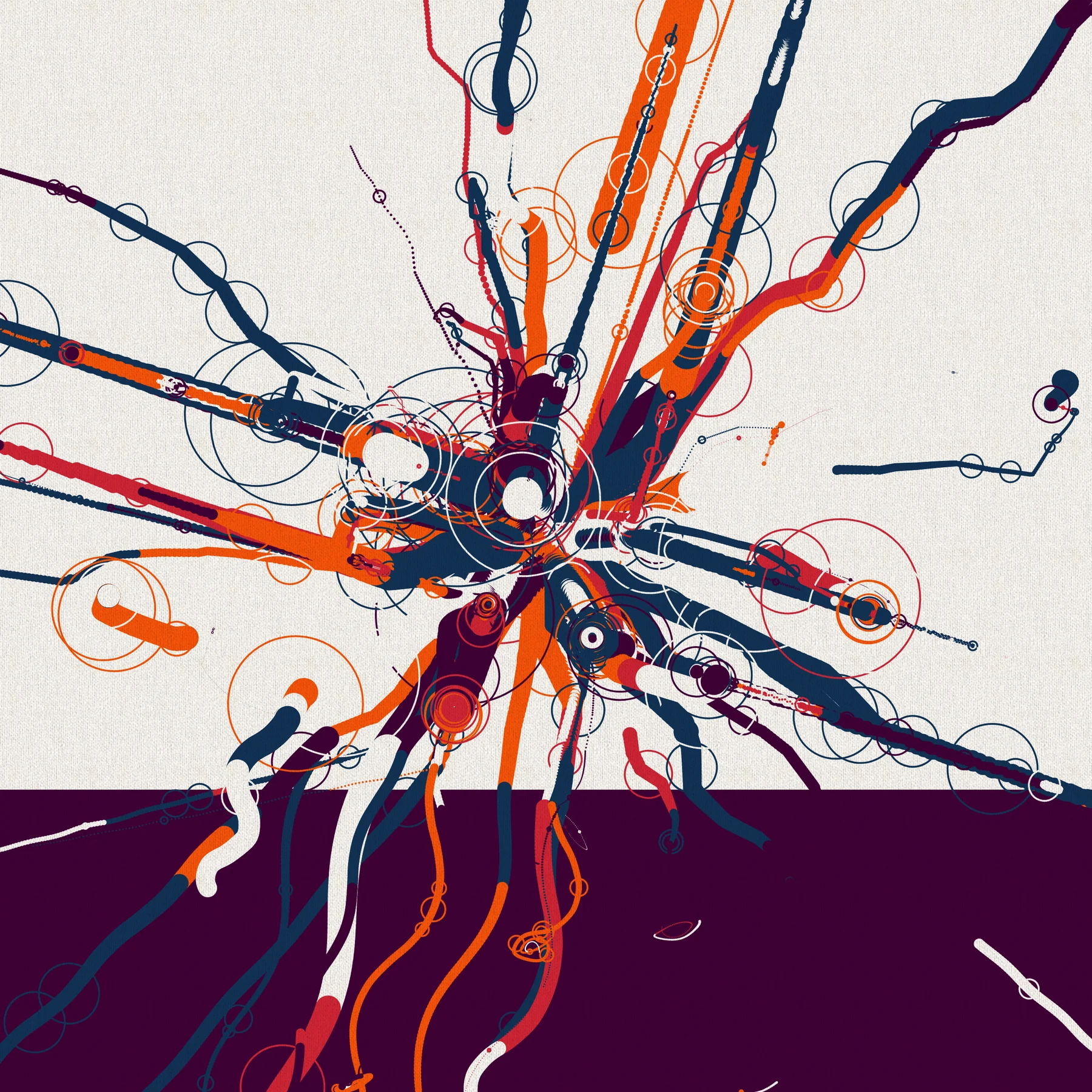
0xca8a3288838d6fd12620638cb54bb3b04faa6e047c65dc29f39439c736e3073b- palette
- Festival8%
- special type
- Hamily2%
- emit
- random40%
- division
- rectangular76%
- chaos factor
- 716%
- particle count
- medium70%
- particle size
- L46%
- start position
- centre81%
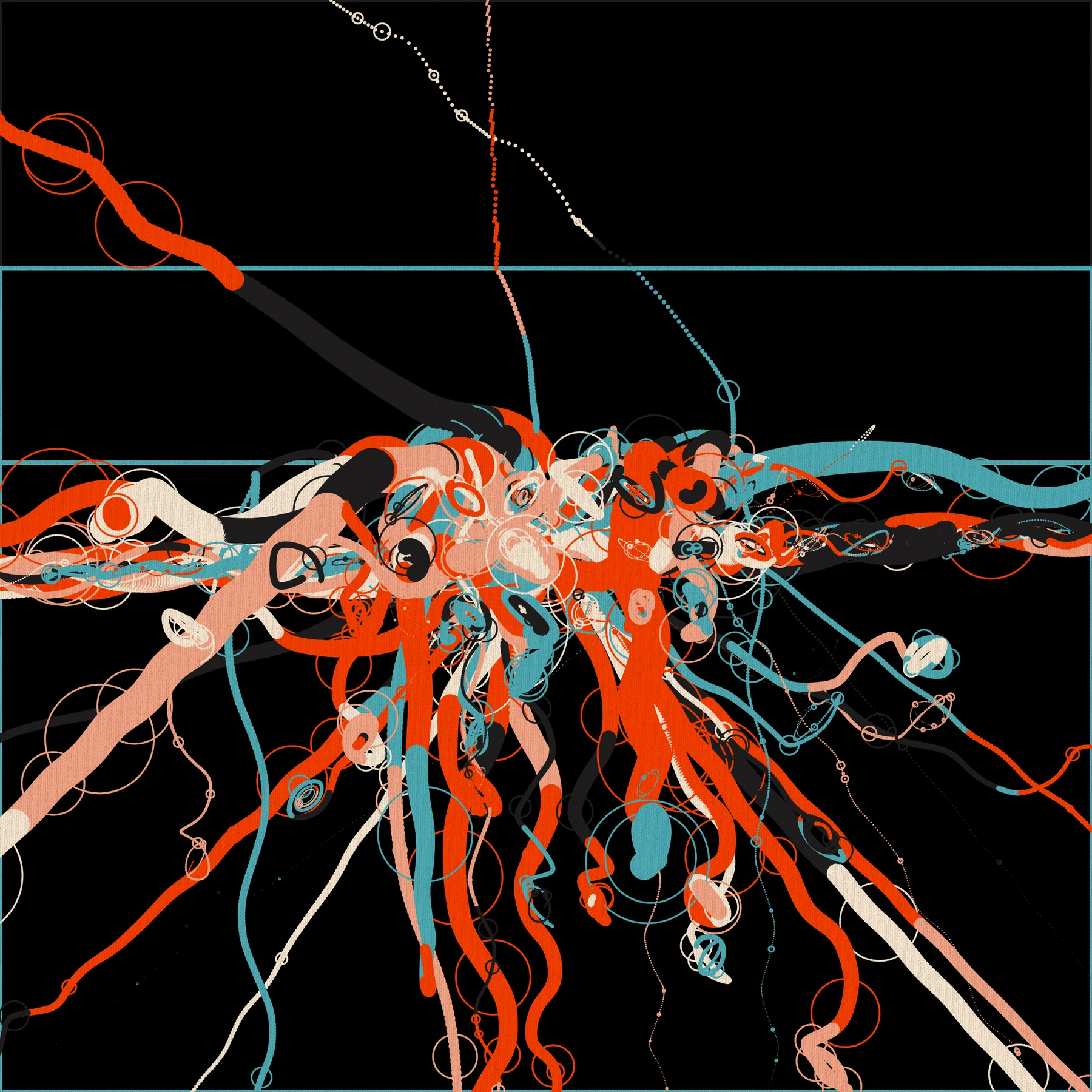
0xfbe80cdaae4471d4281e16d0db09485e7f7343809707139969bce3c8ad5ff1fb- palette
- Confetti9%
- special type
- Wireframe30%
- emit
- random40%
- division
- rectangular76%
- chaos factor
- 103%
- particle count
- medium70%
- particle size
- L46%
- start position
- centre81%
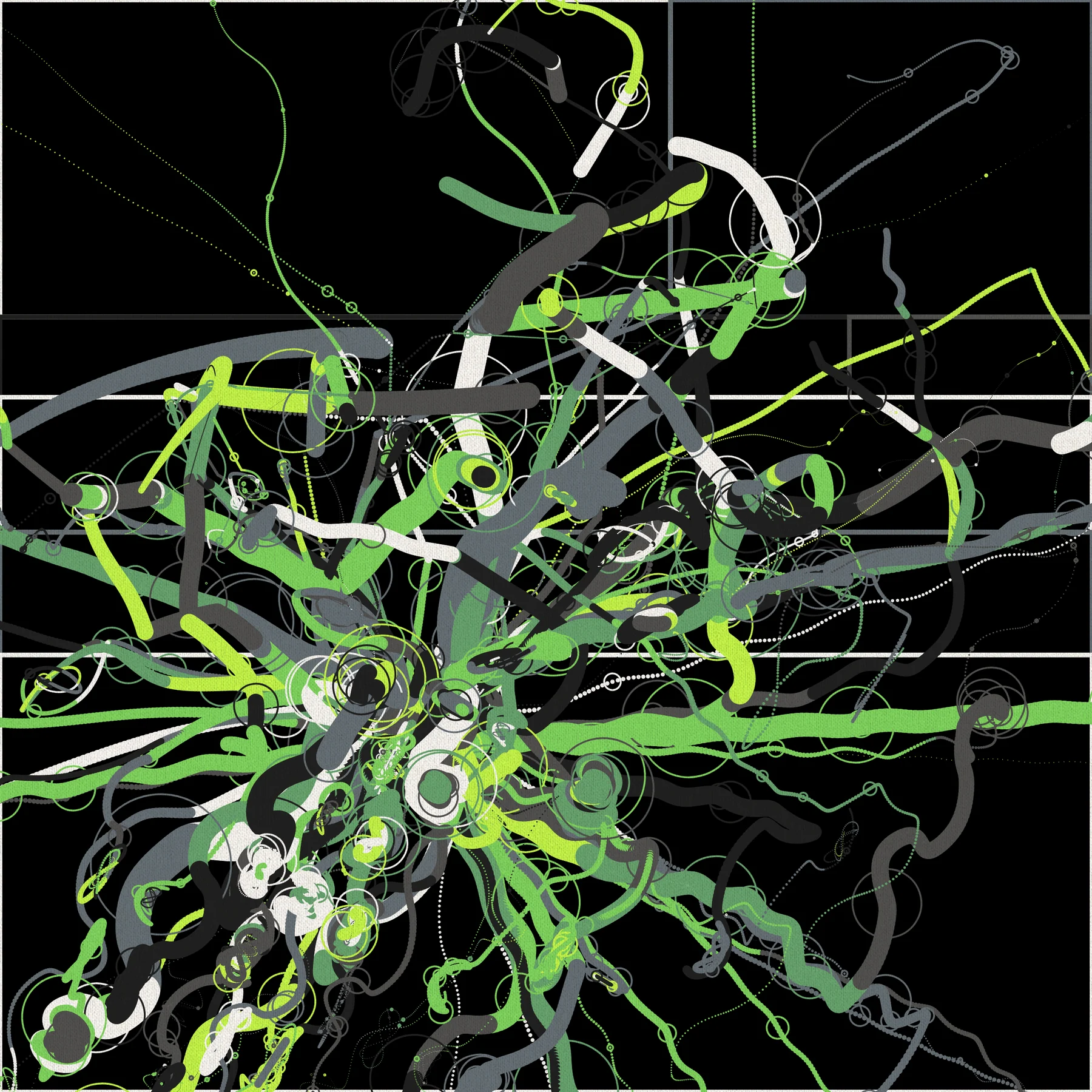
0x4352d9daf9855c654da1e3f31ae7bb03709e96f4b65bdf47ba9d2fb327b66f8f- palette
- Vine8%
- special type
- Wireframe30%
- emit
- random40%
- division
- rectangular76%
- chaos factor
- 519%
- particle count
- more14%
- particle size
- S17%
- start position
- bottom left4%
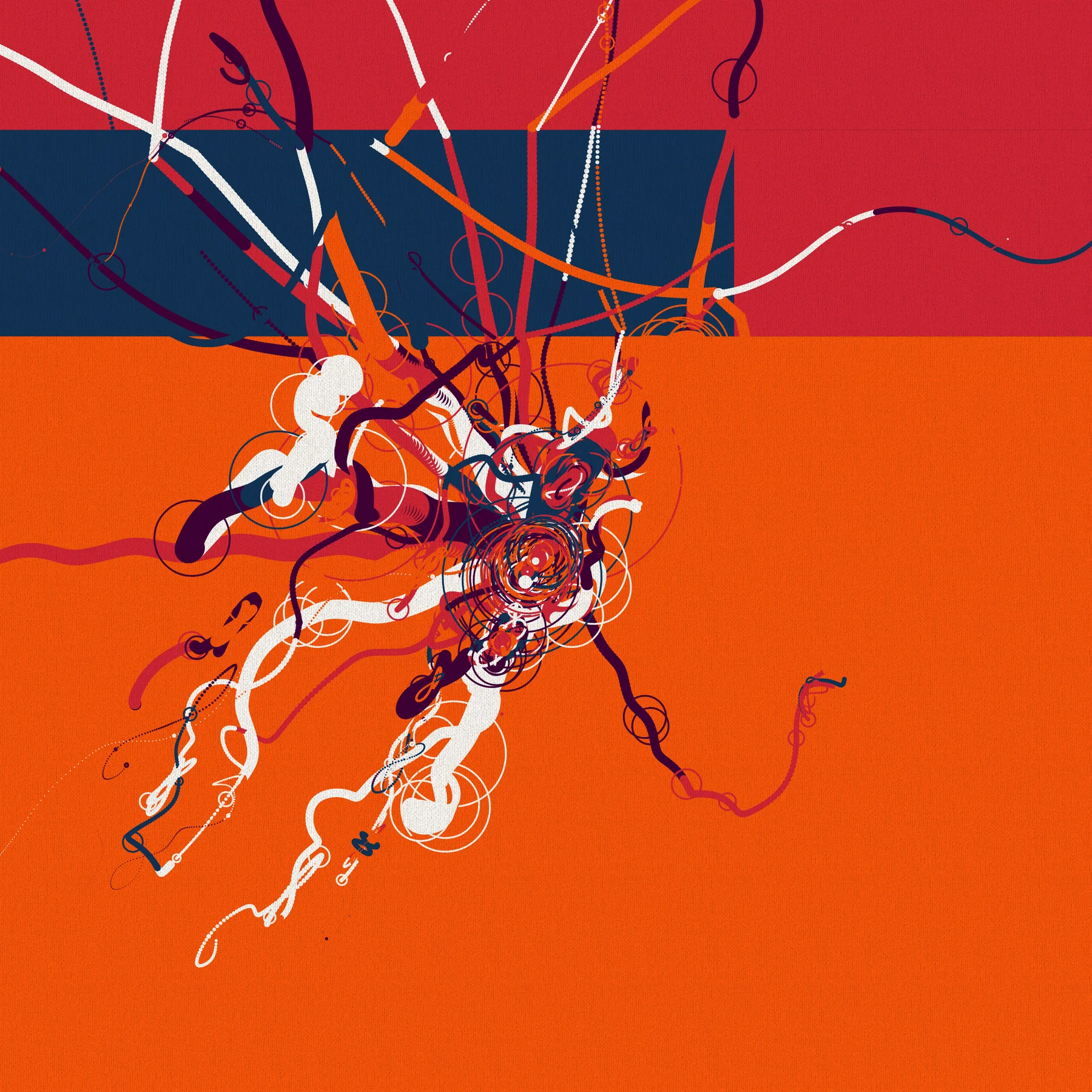
0xc244bfdb9b5b8e867a7cfde689d4498956a83ce110c9a2769263e9186a4e92bb- palette
- Festival8%
- special type
- Hamily2%
- emit
- even33%
- division
- rectangular76%
- chaos factor
- 519%
- particle count
- fewer16%
- particle size
- M28%
- start position
- centre81%
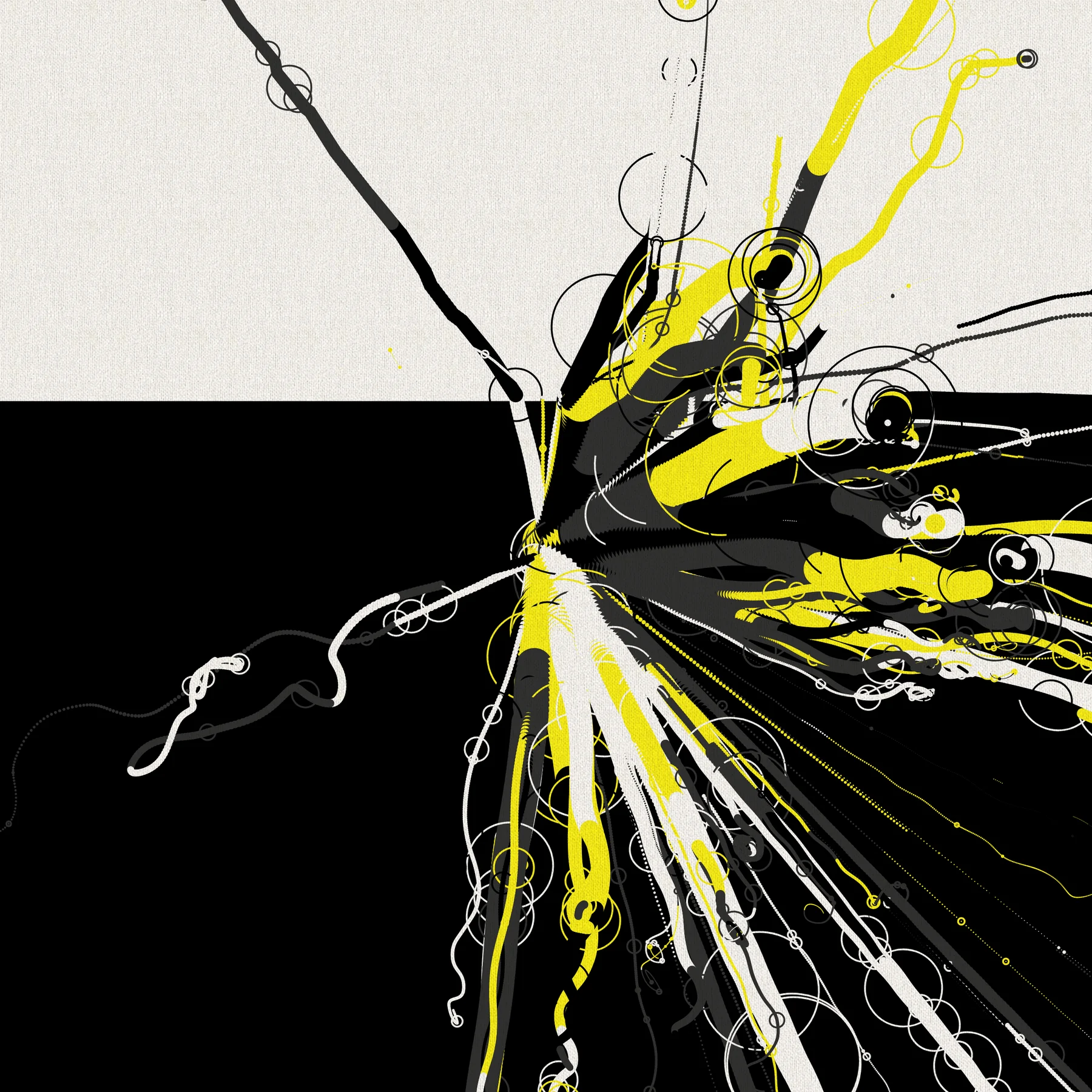
0x6600f23f85e557ad524326889af523dd833721febda816329e66d7a452792f13- palette
- Taxi9%
- special type
- None58%
- emit
- random40%
- division
- rectangular76%
- chaos factor
- 411%
- particle count
- medium70%
- particle size
- M28%
- start position
- centre81%
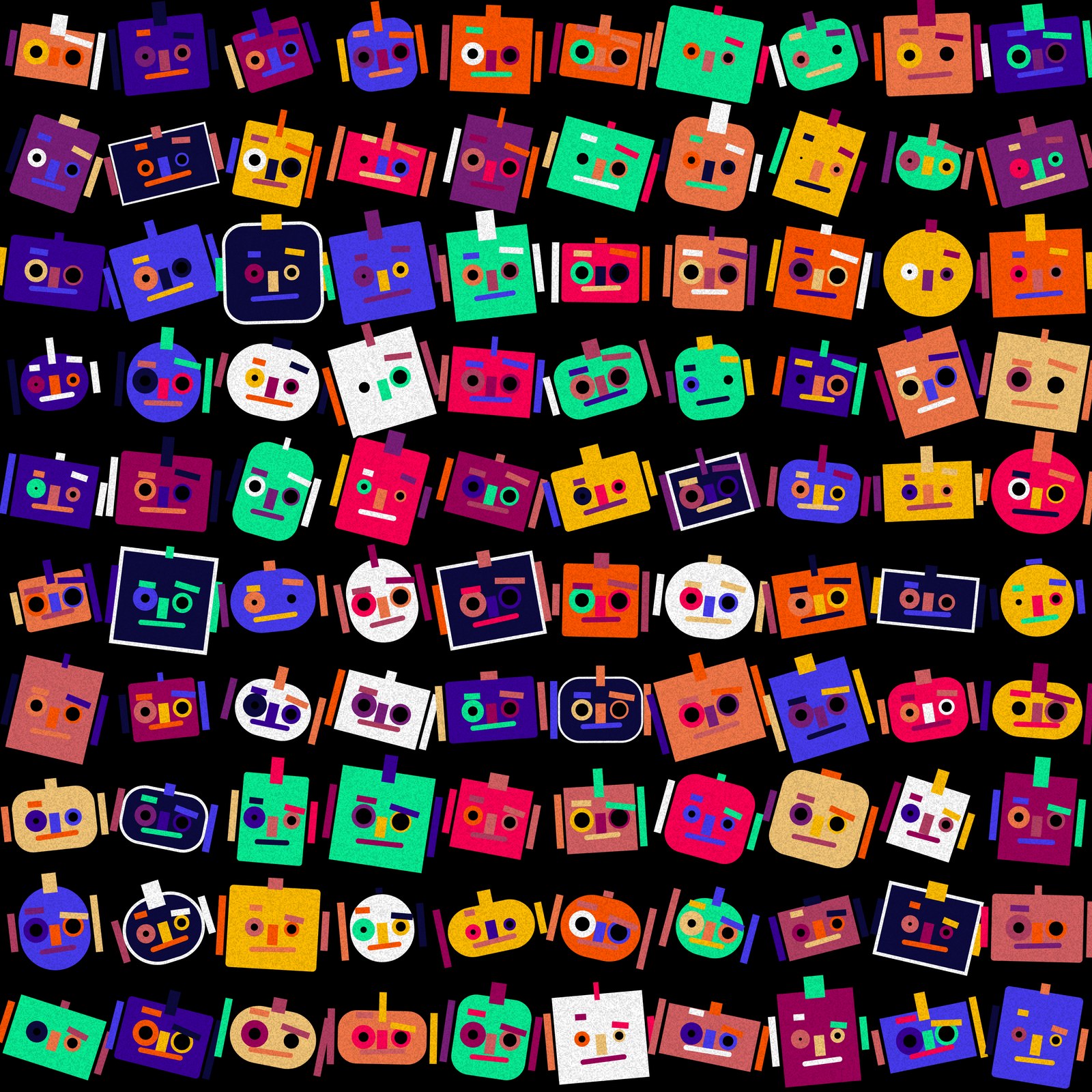
A share is the count of that trait among the nine hundred and ten; the pictures are the official Art Blocks renders.
From a daily sketch to the chain
The daily sketch of 4 October 2021 was called electrization: particles leaving tracks inside a divided space, the first version. On 10 October I opened the Art Blocks project repository, made three rounds, v1, v3 and v4, in three weeks, and submitted on 30 October. The one thing that matters most in going from p5.js to Art Blocks is pinning down randomness: the first sixteen digits of the hash become a seed, an xorshift generator draws from it, noiseSeed and randomSeed both take it, and so the same hash always grows the same picture; the code is cut by length into three chunks and put on chain, each costing roughly one ether in gas. I chose colours in three rounds: spinning the colour wheel at random for a first spark, locking in one blue, then slowly refining the hue; the other route was combinations I already loved in life, like the Earth palette of edition zero, gold on deep blue, because I have always liked bright, vivid colour on a dark ground. The thirteen palettes are named after things and scenes: Paper, Kimono, Sea, Confetti, Vine, Festival, Lollipop, Eastern, Beans, Monochrome, Mint, Taxi, Earth.
The texture key exists so the work looks right both moving and still: a layer of canvas weave sits over the picture, and when you print you press T to turn it off, so the real canvas does not fight the drawn one, then S to save. On the night of the launch, on Art Blocks’ After Dinner Mints, I flipped through my favourites for everyone: the full moon, a space station, an asteroid, and one that looks like a ghost standing in the cloud, casting a spell.
The launch trailer (56 s)
Official Art Blocks renders (2,400 pixels square). Click to enlarge; every edition can be opened and grown again from the database page.
Afterwards
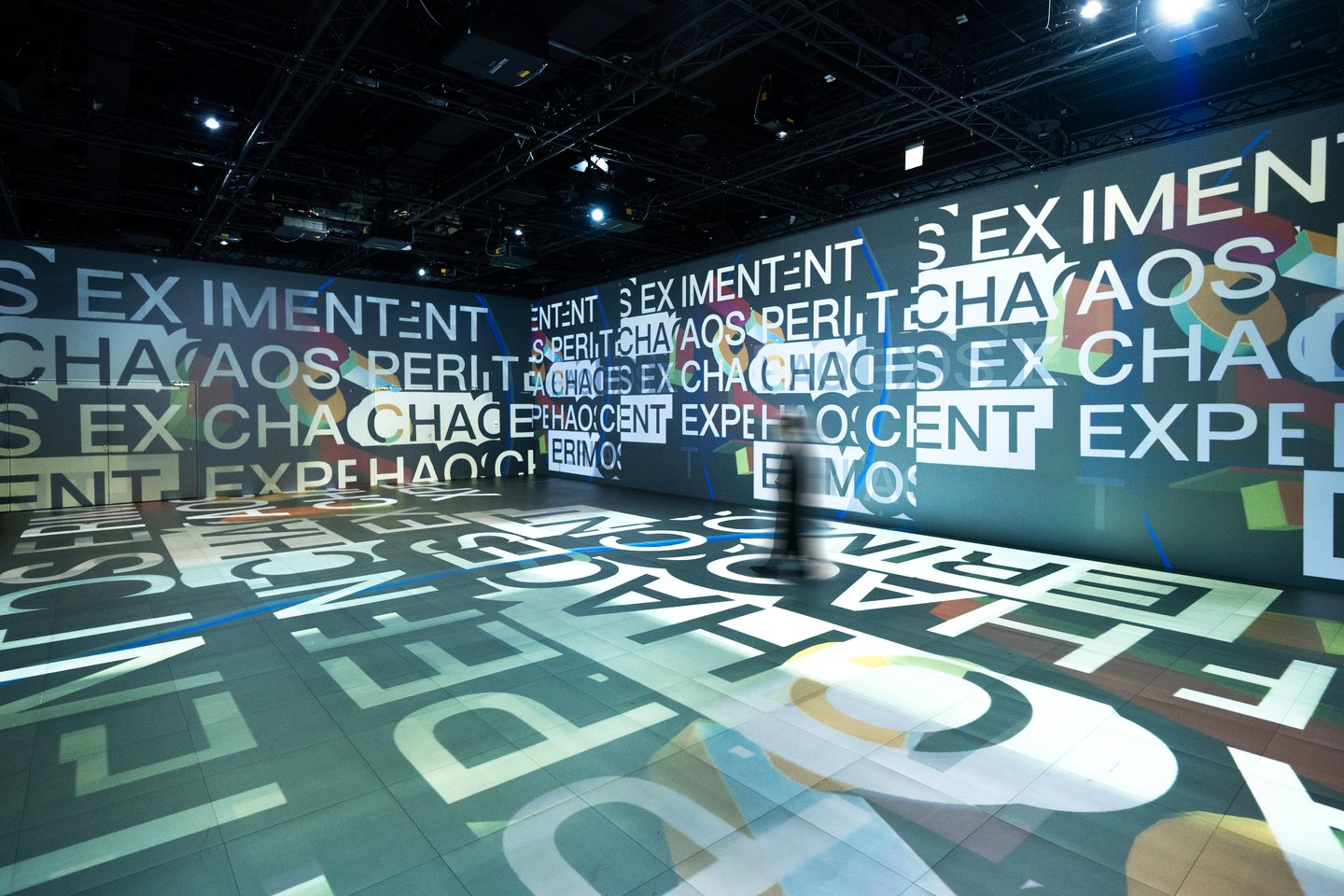
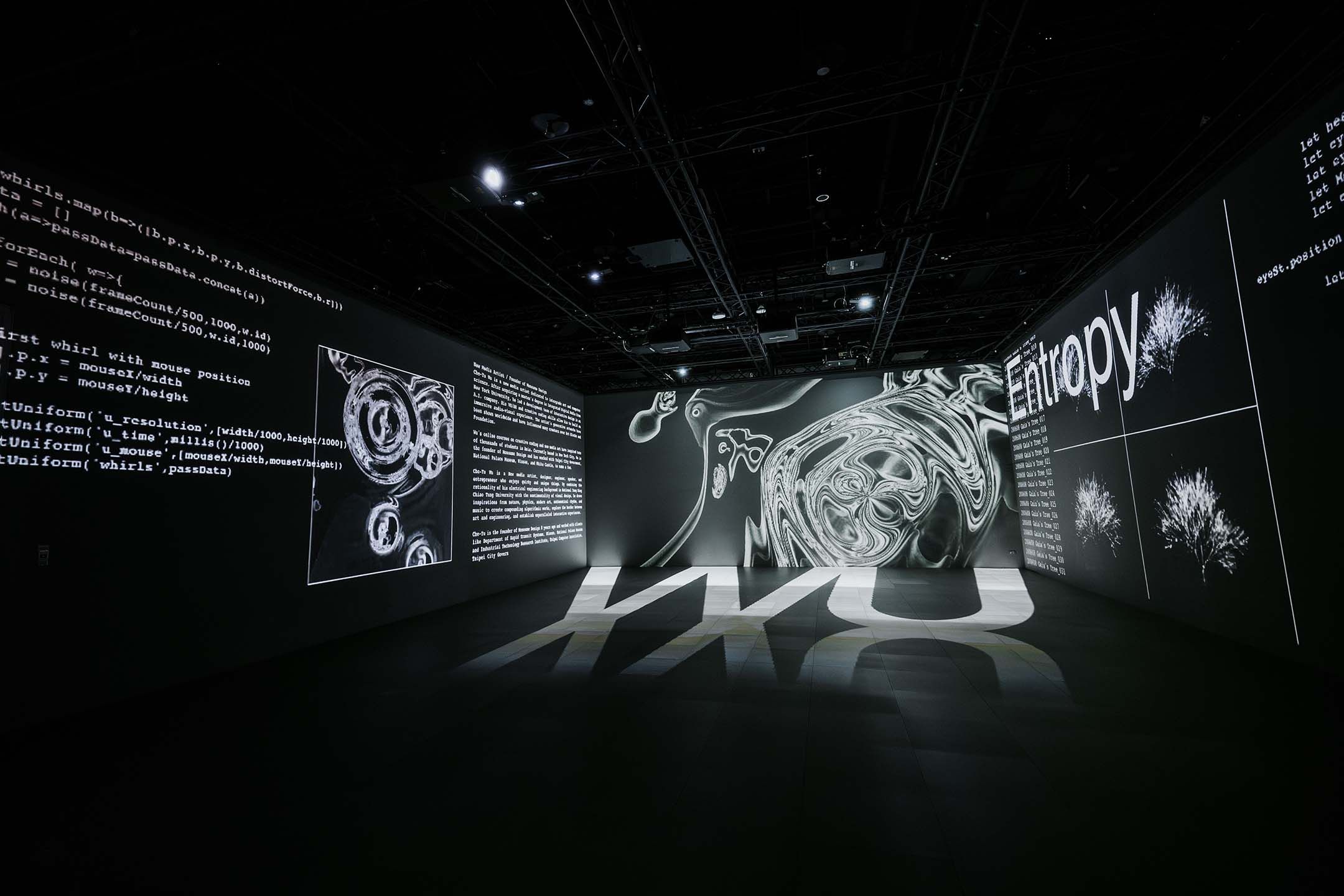
In May 2022 Electriz was the second chapter of Chaos Laboratory, the Electric Laboratory, running across the five walls of AMBI SPACE ONE; that year Mashbean said FAB DAO had been founded on the ten ether Electriz brought in. In September 2023 I taught a digital cloud chamber with it at a PCD workshop; in 2024 canvas prints were made at 5,748 pixels square, #517 and #723, one each with and without texture. In September 2026 we moved the on-chain script, untouched, to our own subdomain and re-ran all nine hundred and ten editions, every trait matching the Art Blocks record.
#0 growing (18 s)
- 01
4 October 2021
The daily sketch electrization (OpenProcessing 1294463)
- 02
10 to 30 October 2021
The Art Blocks repository; three rounds, v1, v3, v4; submitted on the 30th with an estimated thousand editions
- 03
27 November 2021
#0 minted by the artist: the full moon
- 04
7 December 2021
On sale at 17:00 UTC, Dutch auction 3 to 0.1 ETH; all 910 minted by 17:55:38
- 05
9 December 2021
Art Blocks’ After Dinner Mints, episode 29
- 06
May 2022
The Electric Laboratory chapter of Chaos Laboratory; FAB DAO founded on the ten ether from Electriz
- 07
10 September 2023
The Digital Cloud Chamber workshop at PCD Taiwan
- 08
July 2024
#517 and #723 printed on canvas at 5,748 pixels square
- 09
20 September 2026
The on-chain script self-hosted, all 910 re-run, the database published
Original work record
Original text: the 2021 Art Blocks project description and the four concept passages from the submission deck (kept verbatim); “eight combinations of colors” was the wording then, and the on-chain script has thirteen palettes.
"Electriz" is a series of works that use digital cloud chambers to observe the traces of unidentified particles. When doing art creation, just like scientists discovering new particles, artists continue to draw interesting ideas from reality and fantasy to collide with each other, trying to find a unique existence at the moment of collision in the process of mixing ideas. The space in the work "Electriz" is divided into parts with different physical characteristics, which affect the movement, rotation, splitting, and annihilation of particles. It is an unpredictable experimental system with unlimited possibilities to explore the intersection of physics, mathematics, and art.
Project Concept
In physics, scientists collect debris through colliders hitting particles at high speeds, trying to find the smallest unit in the world, but such a small particle cannot be seen with the naked eye. How to detect it? Traditionally, we use cloud chambers to make tiny particles leave tracks. When they pass through the foggy space, they will leave traces to symbolize their existence. If we want to judge the physical properties of the particles-mass, size with the strength of the electric charge, it can apply an electric or magnetic field to space. When the charged particles penetrate the electromagnetic field, they will be affected by the Lauren force and will be affected by the force perpendicular to the direction of motion, resulting in a vortex-like trajectory, leaving a picture the shape of a digital fern is similar, and its exact physical properties can be known by judging the mass of the particle and the radius of the trajectory.
Cloud chamber
When doing art creation, just like scientists discovering new particles, artists are constantly drawing interesting ideas from reality and fantasy to collide with each other, trying to find a unique existence at the moment of collision, and in the process of fusion of ideas. Each thought in the book will shape the core creative concept through a series of brushstrokes, different experimental works, color blends, and trajectories. Art is the same as physics. Through continuous proof of concept (Prototyping), we find the most the real appearance, each artist is like a parallel universe with independent laws of physics, searching for the root through creation, searching for the self who has experienced countless differences and accumulations after being born in this world, and then interpreting the artist's own imagination through observable works and perspectives.
Space division and particle movement
Use right-angle dividing lines and angle divisions to create different worlds. In each world, there are different laws of physics: electric field, noise, positive and negative rotation particle charge, or grid force, in the particles when crossing the boundary of space, there is a certain probability that new particles will be split out. When entering the space, it will be affected by the divided space and draw different trajectories. Each space also has its own gravitational acceleration and electromagnetic field, which can produce similar external particles. Star totem braided shape.
The space is divided into the following categories:
Field → Electromagnetic field, the force is determined by sin and cos according to the current position, which will produce a trajectory like a vine or a winding picture
Noise → Perlin Noise, will randomly determine the direction of force and movement according to the noise distribution
Curl → According to the magnitude/mass and polarity of the charge, a vortex-like trajectory will be produced.
Step → Bring the grid coordinates of the discretized particles into the cos to calculate the force and generate a dynamic extending along the separation line and the diagonal line.
Particles
Particles will be released from a point in space, giving random initial speed and direction to influence each other in space.
When particles are produced and moved, they will gradually consume their own mass and charge, change the trajectory of their movement, and observe the gradually shrinking vortex in the force of the electric field.
When the particles are split, the maximum number of splits and the generation limit of each particle prevents infinitely generated particles from occupying the screen.
There are eight combinations of colors, which are named after objects or scenes, so that the color combinations and particle trajectories can be matched into unique paintings, such as Taxi, Grass, Mint, NewsPaper to Kimono... etc.
- LiveThe on-chain script, self-hosted: a random edition each time
- DatabaseThe 910 database: hashes, traits, palettes, every edition re-run
- Daily sketchThe origin: the daily sketch electrization
- PlatformProject #216: Electriz by Che-Yu Wu
- PlatformThe collection
- FilmAfter Dinner Mints episode 29: the interview on launch night
- FilmA two-hour live stream: how it went from p5.js to Art Blocks
- FilmPCD Taiwan workshop: the digital cloud chamber
- CREATIVECODING.INOur siteI have started selling NFT works!
- ShownChaos Laboratory: the Electric Laboratory chapter
Notes are live things and our own pages, tags the platforms and records; every one opens.
Credits
- Artist, code
- Che-Yu Wu (p5.js 1.0.0)
- Platform
- Art Blocks Factory, 7 December 2021; After Dinner Mints episode 29
- Tools
- Token Art Tools (Owen Moore) for testing hashes before submission
- Records
- Live-stream notes by Jeudi Kuo (creativecoding.in, June 2022)
- Self-hosting and database, 2026
- A byte-identical copy of the on-chain script with p5 1.0.0; all 910 re-run, every trait matching the Art Blocks record
This work grew out of the “electrization” family: 2 daily sketches, 2021-10-04 to 2021-11-08. 1 of the links are forks.
Context & sources
Exhibitions, research & collaborations
Contact the artist