1TB 硬碟根目錄有兩份 PDF:〈叫叫AED 人物總覽〉6 頁,建立時間 2016 年 3 月 13 日 09:46,和〈系統架構〉3 頁,同日 12:05 建立,兩份都落在 3 月 12 日到 13 日的黑客松期間。同一個位置還有〈雜訊空投(送印版)-02.png〉,是四位隊員的照片海報,有人臉,所以沒放。
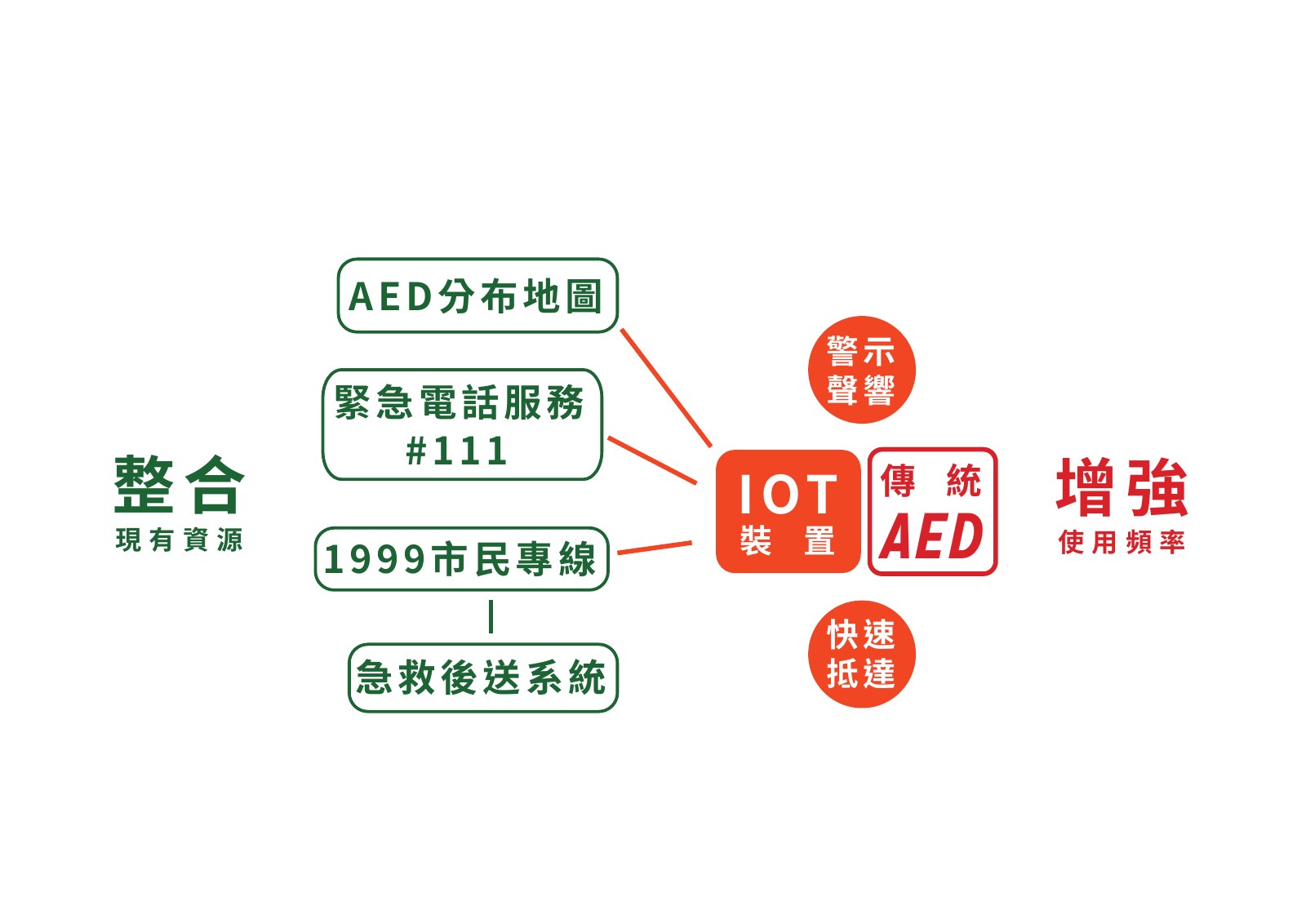
總覽第一頁把現有資源放在左邊:AED 分布地圖、緊急電話服務 #111、1999 市民專線、急救後送系統。右邊是 IOT 裝置加傳統 AED,目標寫「增強使用頻率」,標出警示聲響與快速抵達。第 2、3 頁寫黃金救援時間從 0 分鐘到 5 分鐘,傳統 AED 單位成本 NTD 200,000、使用率低於 3.7%,加上裝置後單位成本多 2,000、使用率估計 20% 到 40%。第 4 到 6 頁是藍底的卡通角色,有求救的人、擔架、戴帽子的路人、AED 機器和舉著「市民專線 1999」牌子的角色,這裡沒有放。
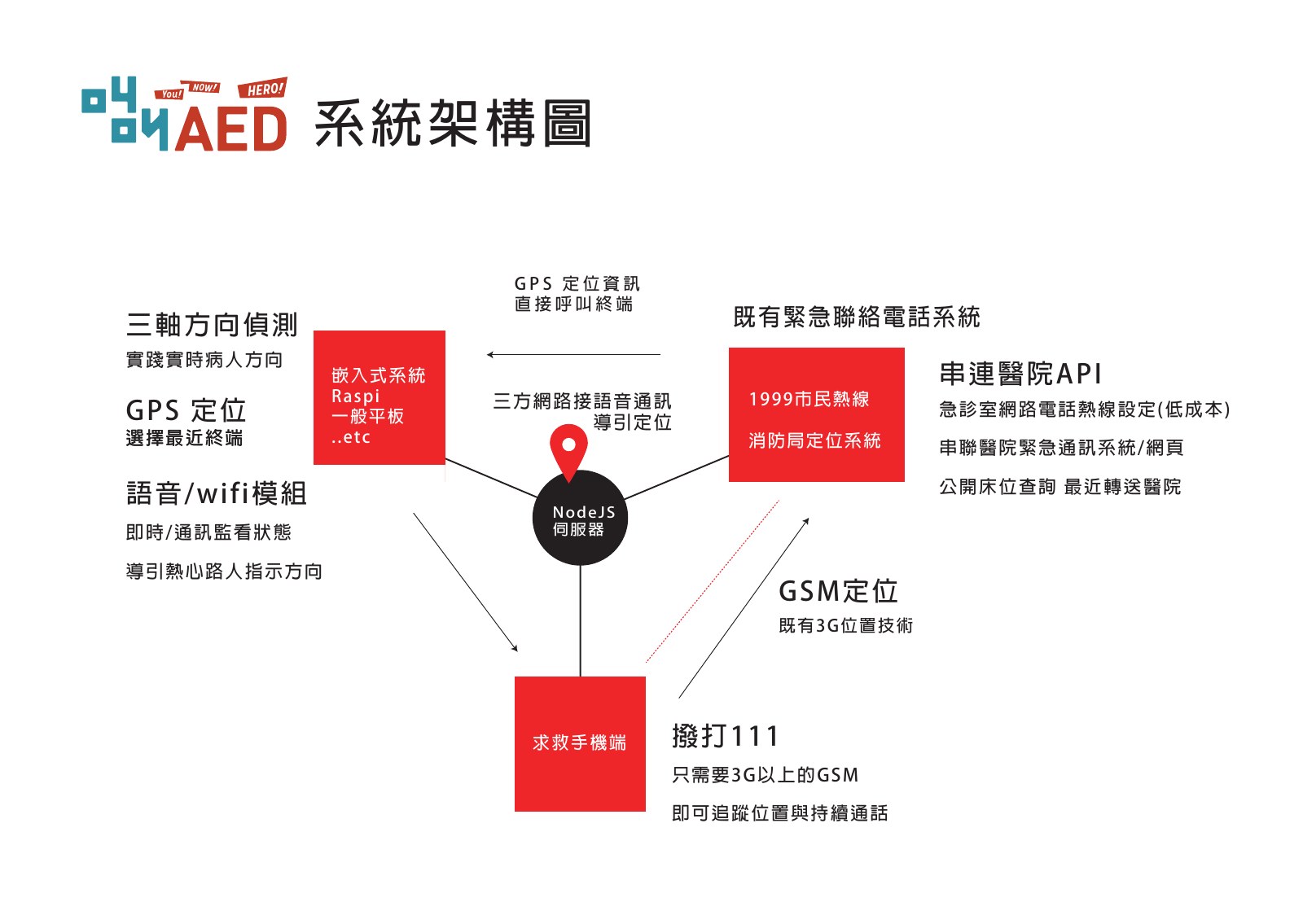
系統架構圖的標題旁是「叫叫AED」標誌與 You、NOW、HERO 三張小貼紙。求救手機撥打 111,只需要 3G 以上的 GSM 就能追蹤位置與持續通話,中間是 NodeJS 伺服器,接 1999 市民熱線與消防局定位系統,AED 端用 Raspi 或一般平板,帶 GPS、三軸方向偵測、語音與 wifi 模組,並串連醫院 API。架構圖的第 2、3 頁是零件與外殼尺寸草圖,這裡沒有放。
The root of the 1TB drive holds two PDFs: the six-page “Jiao-Jiao AED overview”, created at 09:46 on 13 March 2016, and the three-page “System architecture”, created at 12:05 the same day. Both fall within the hackathon of 12 and 13 March. The same place also holds “Noise Airdrop (print version)-02.png”, a photo poster of four team members; it shows faces, so it is not shown.
On the left of the first overview page are the existing resources: an AED distribution map, the emergency phone service #111, the 1999 citizen hotline and the ambulance transfer system. On the right are an IoT device and a traditional AED, with the goal “raise frequency of use”, marking an alarm sound and faster arrival. Pages 2 and 3 show the golden rescue window from 0 to 5 minutes, a traditional AED at NT$200,000 per unit and under 3.7% use, and, with the device added, 2,000 more per unit and an estimated 20% to 40% use. Pages 4 to 6 are cartoon characters on blue: a person in need, a stretcher, a passer-by in a hat, AED machines and a character holding a “citizen hotline 1999” sign, which are not shown here.
Beside the title of the architecture diagram are the “Jiao-Jiao AED” logo and three small stickers reading You, NOW and HERO. The caller's phone dials 111 and needs only a 3G or better GSM connection to be tracked and stay on a call. A NodeJS server sits in the middle and connects to the 1999 citizen hotline and the fire department's positioning system. The AED end uses a Raspi or an ordinary tablet with GPS, three-axis direction sensing, voice and wifi modules, and links to hospital APIs. Pages 2 and 3 of the architecture file are sketches of components and casing dimensions, which are not shown here.